Simplify Secure Authentication
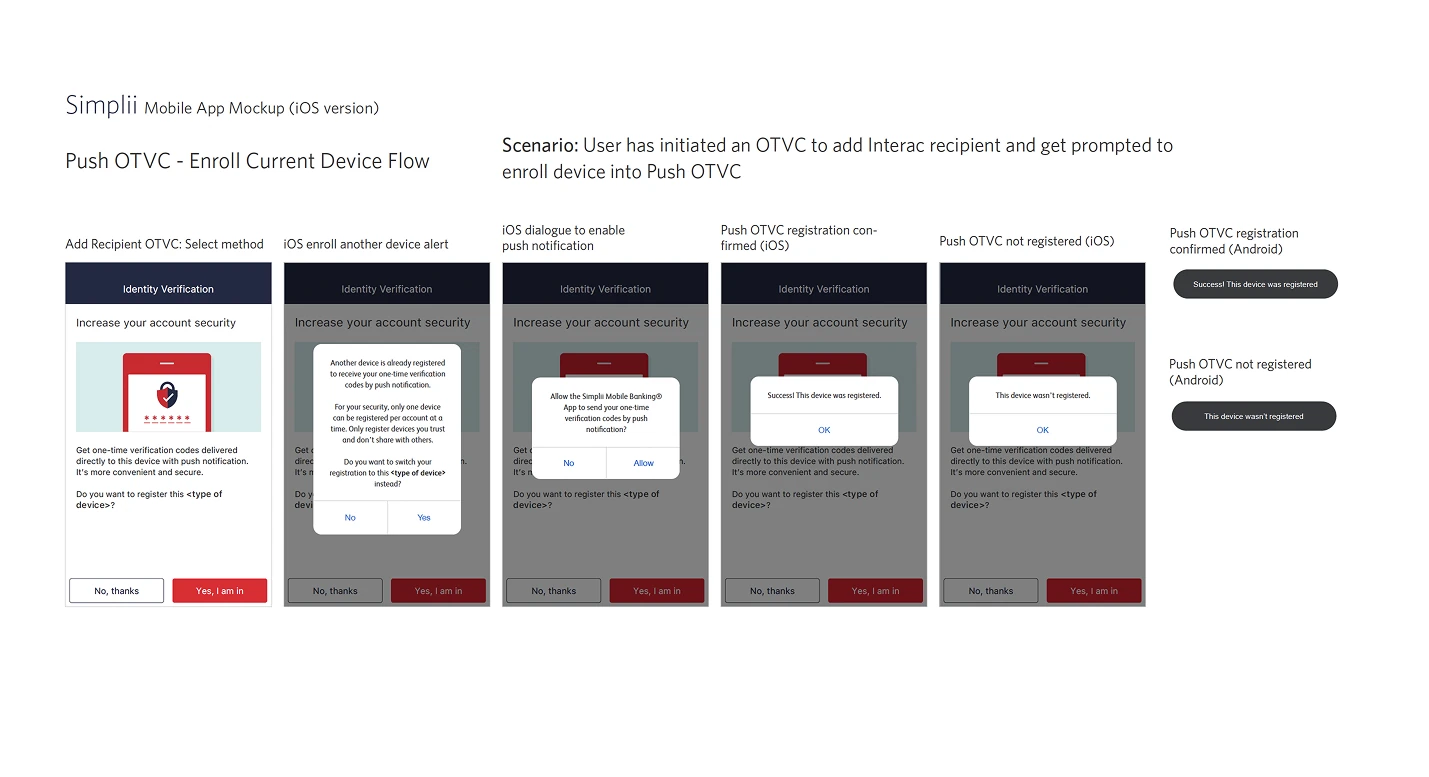
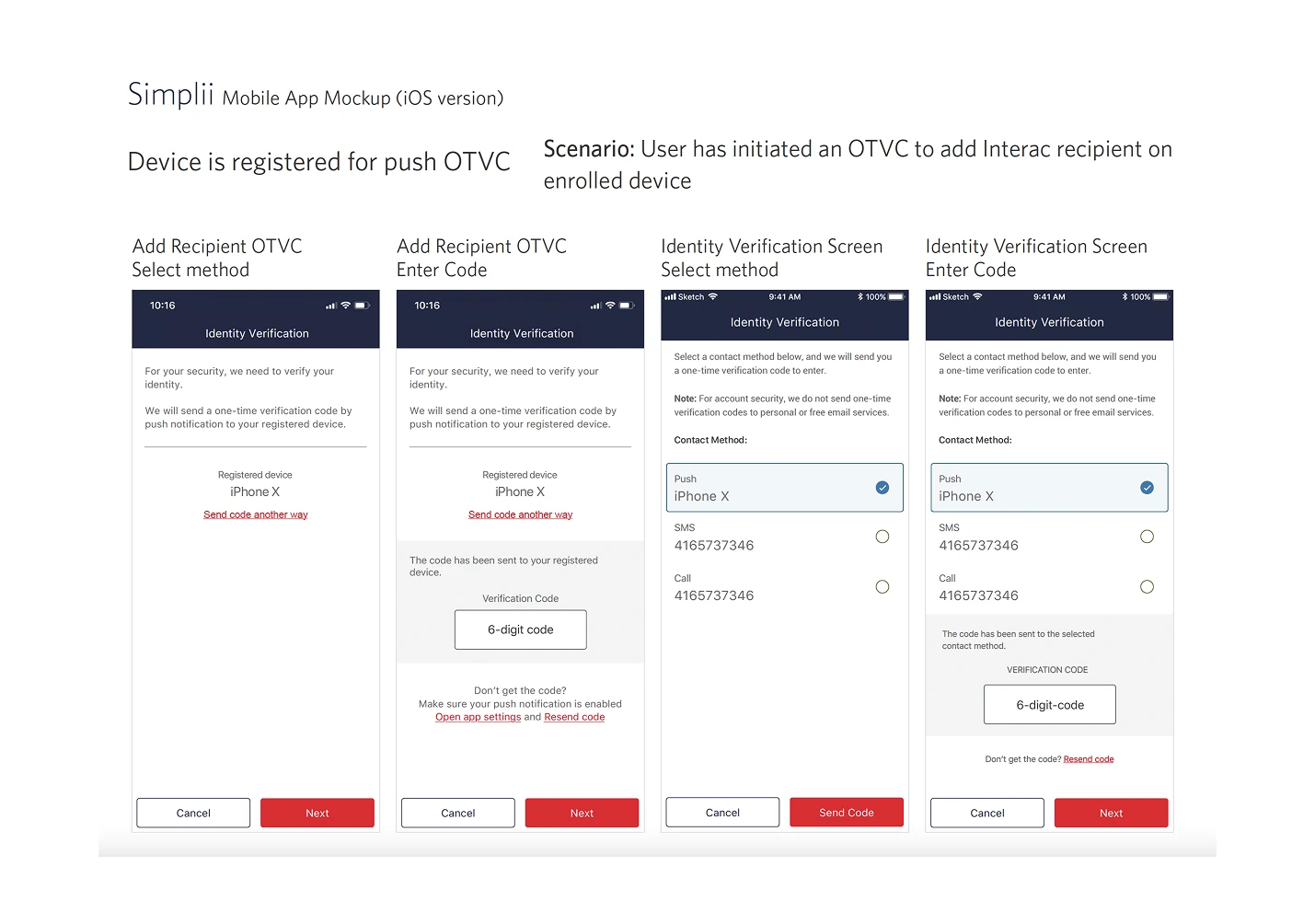
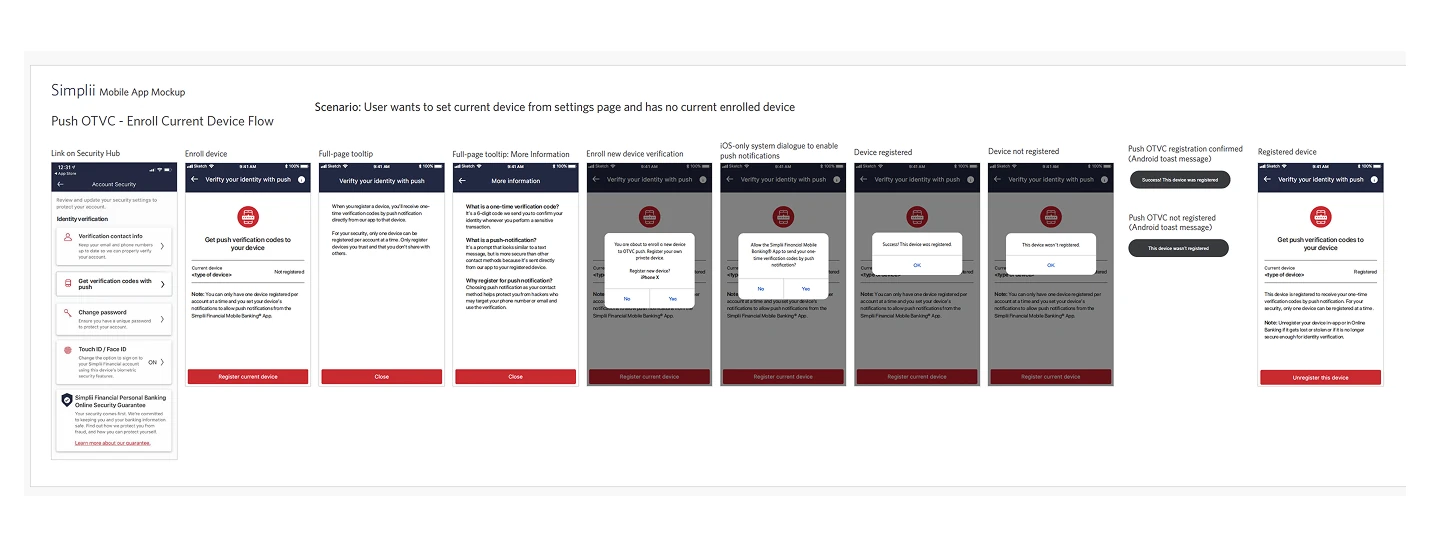
Designed an intuitive device registration experience that enables customers to receive one-time verification codes through push notifications, minimizing unnecessary authentication friction.


A secure and seamless OTVC experience for trusted device registration on the CIBC Mobile Banking App.
Enhancing CIBC’s mobile banking authentication experience by enabling customers to register their mobile devices and receive One-Time Verification Codes (OTVC) through push notifications, even when they are not actively using the banking app.
Simplifying Secure Authentication
Digital banking authentication must balance stringent security requirements with customer convenience. The challenge was to introduce a secure device registration and push notification feature without adding unnecessary complexity to the customer experience.
Designed an intuitive device registration experience that enables customers to receive verification codes through push notifications. The design focused on simplifying registration, providing clear instructions and feedback, and accommodating different notification scenarios while maintaining security, accessibility, and usability.
Leading the Design of a Secure Banking Experience
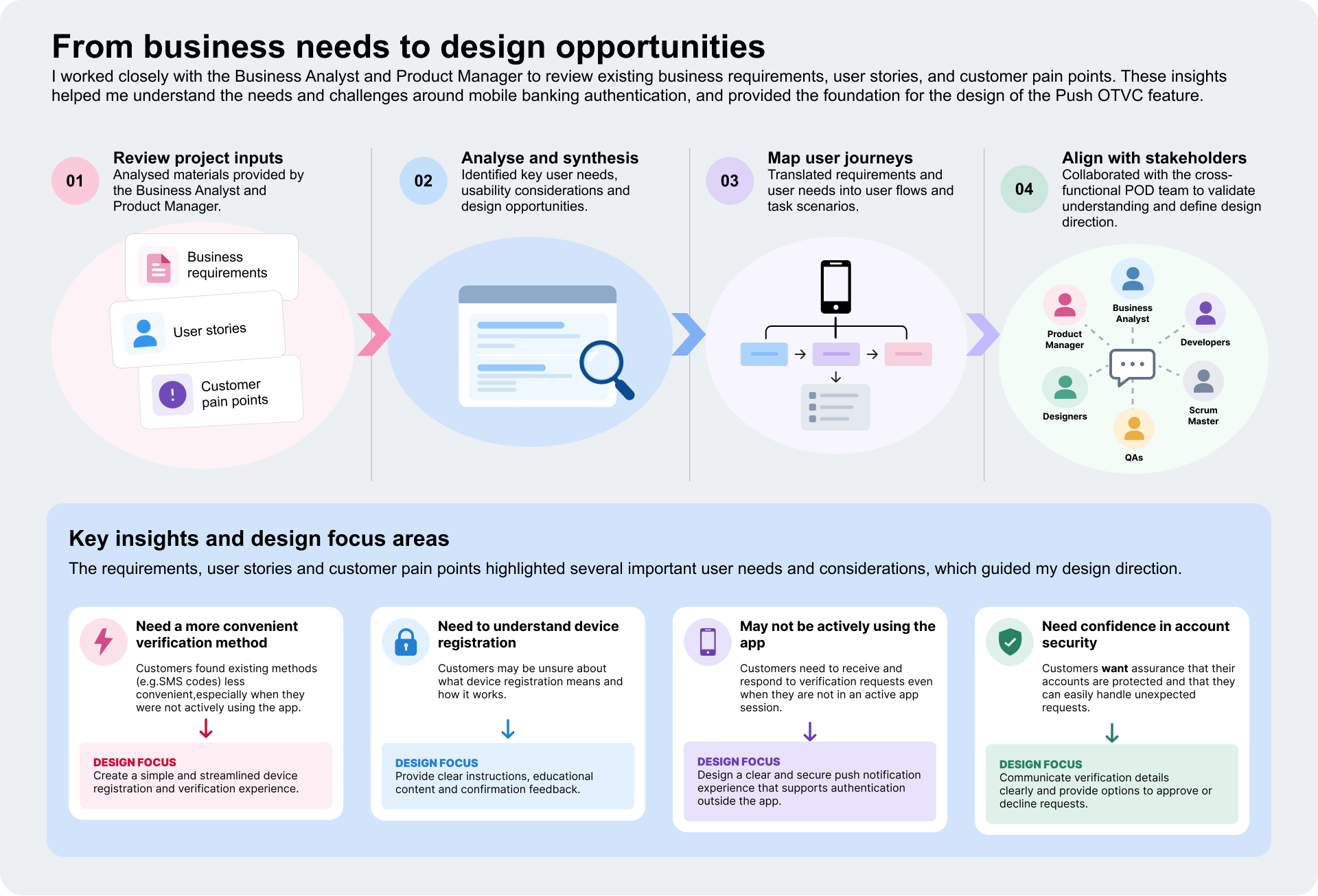
As the Lead Product Designer, I was responsible for translating business, security, and technical requirements into intuitive user flows, interaction designs (UID), and high-fidelity visual designs (VD). I collaborated closely with a cross-functional Agile POD consisting of designers, developers, business analysts, QA specialists, Scrum Masters, and the Product Manager to deliver a cohesive, accessible, and secure mobile banking experience.

Learn the business goals, who is involved, and the limits of a regulated banking setting.
Review user feedback and data, and audit the flows that already exist.
Draw flows and interfaces in Sketch, prototype the key paths and review them with stakeholders.
Hand off specs and stay close to engineering through build and QA.
A look at the work itself: the screens, flows and details that shipped.
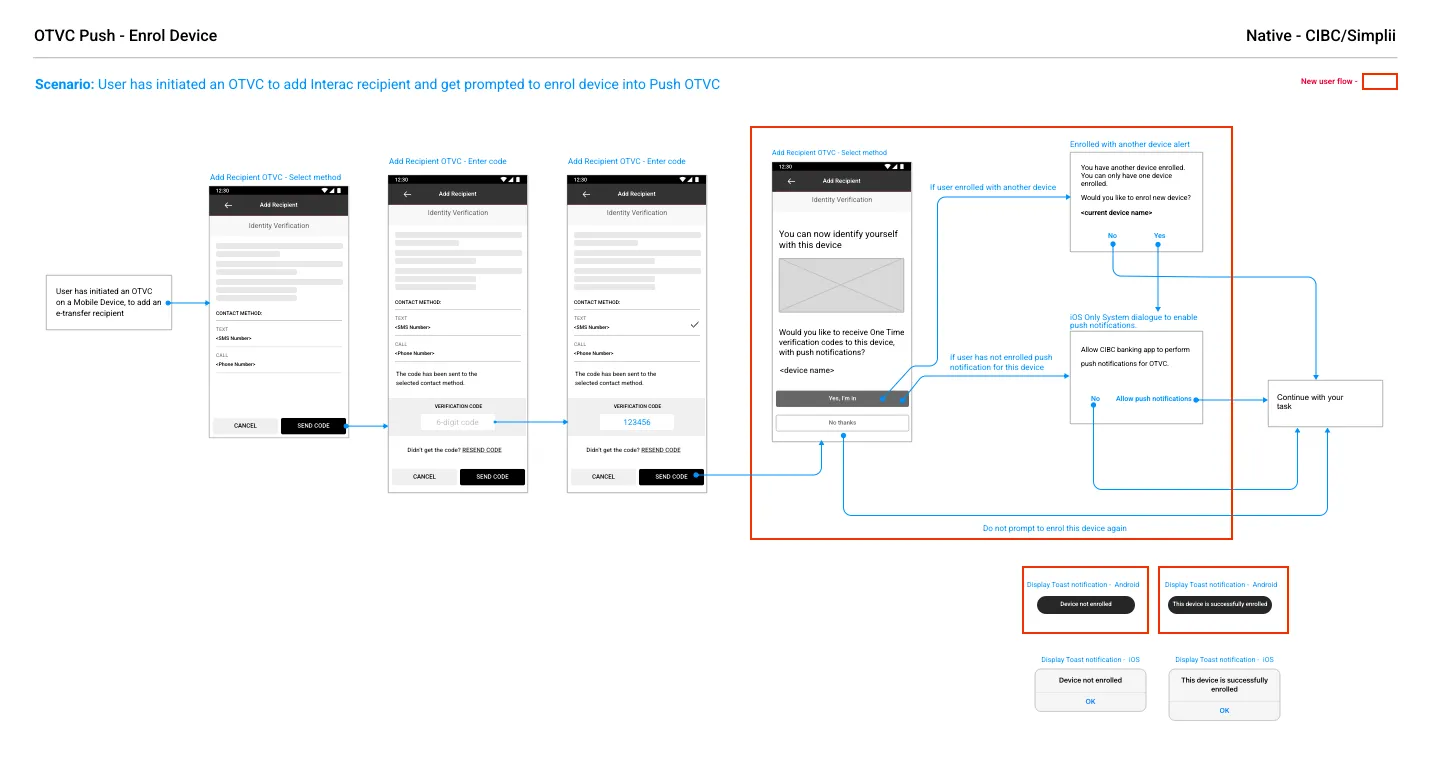
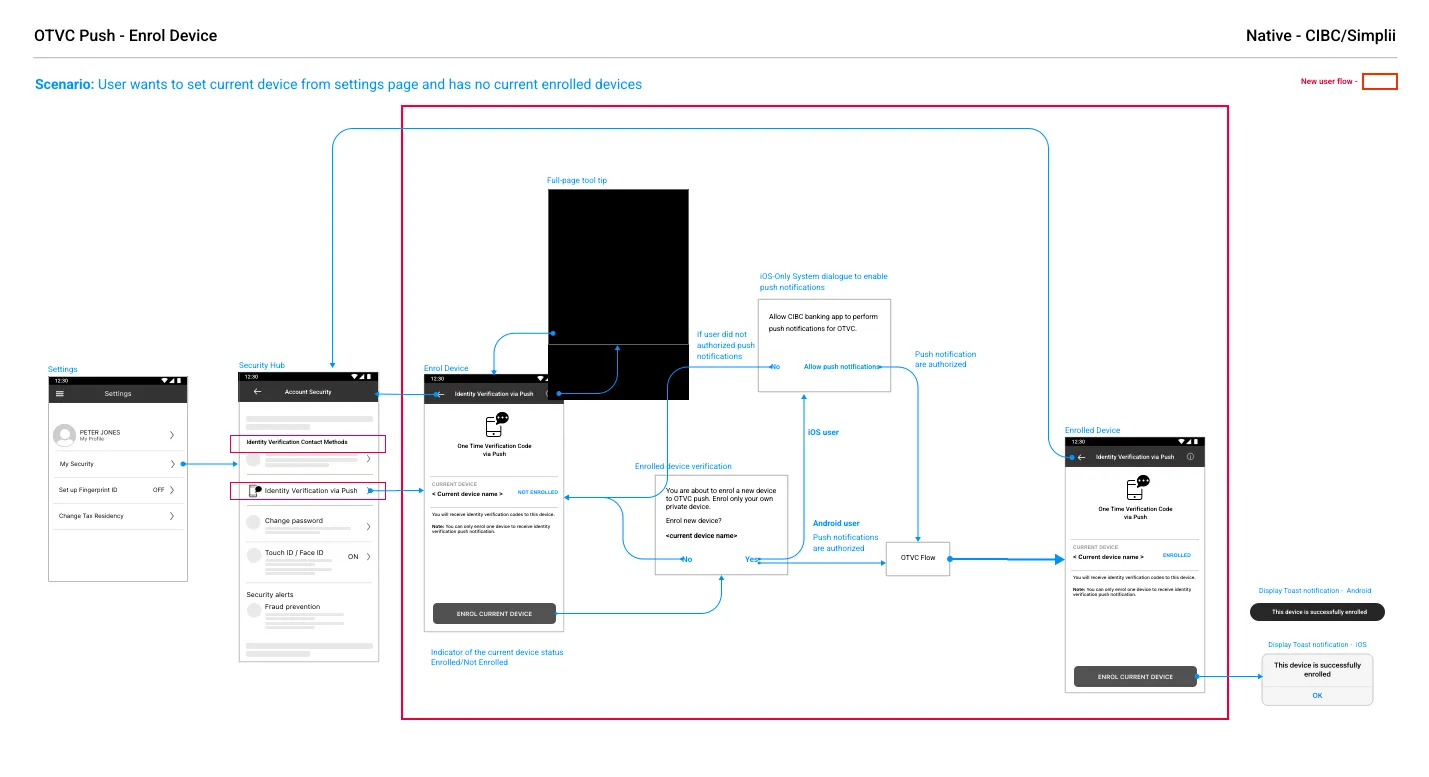
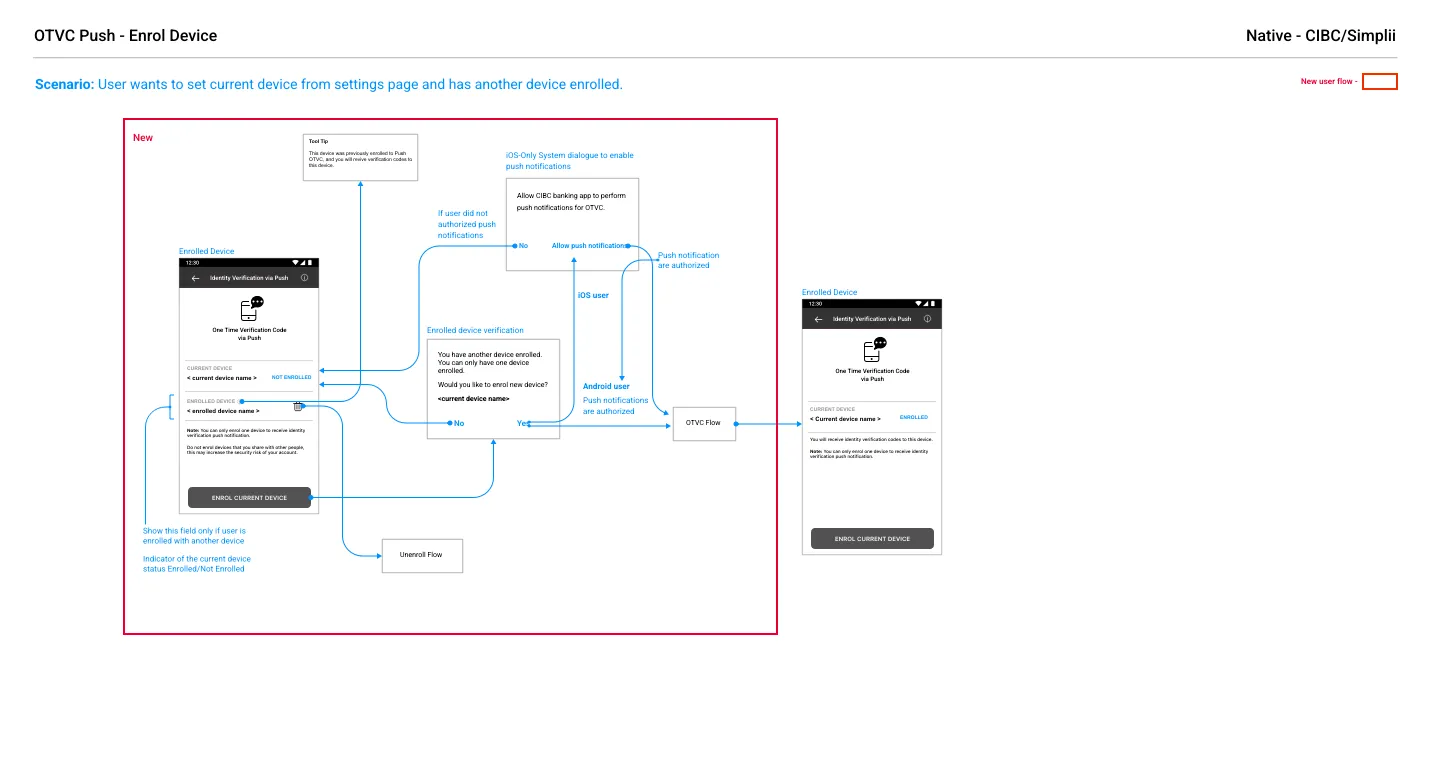
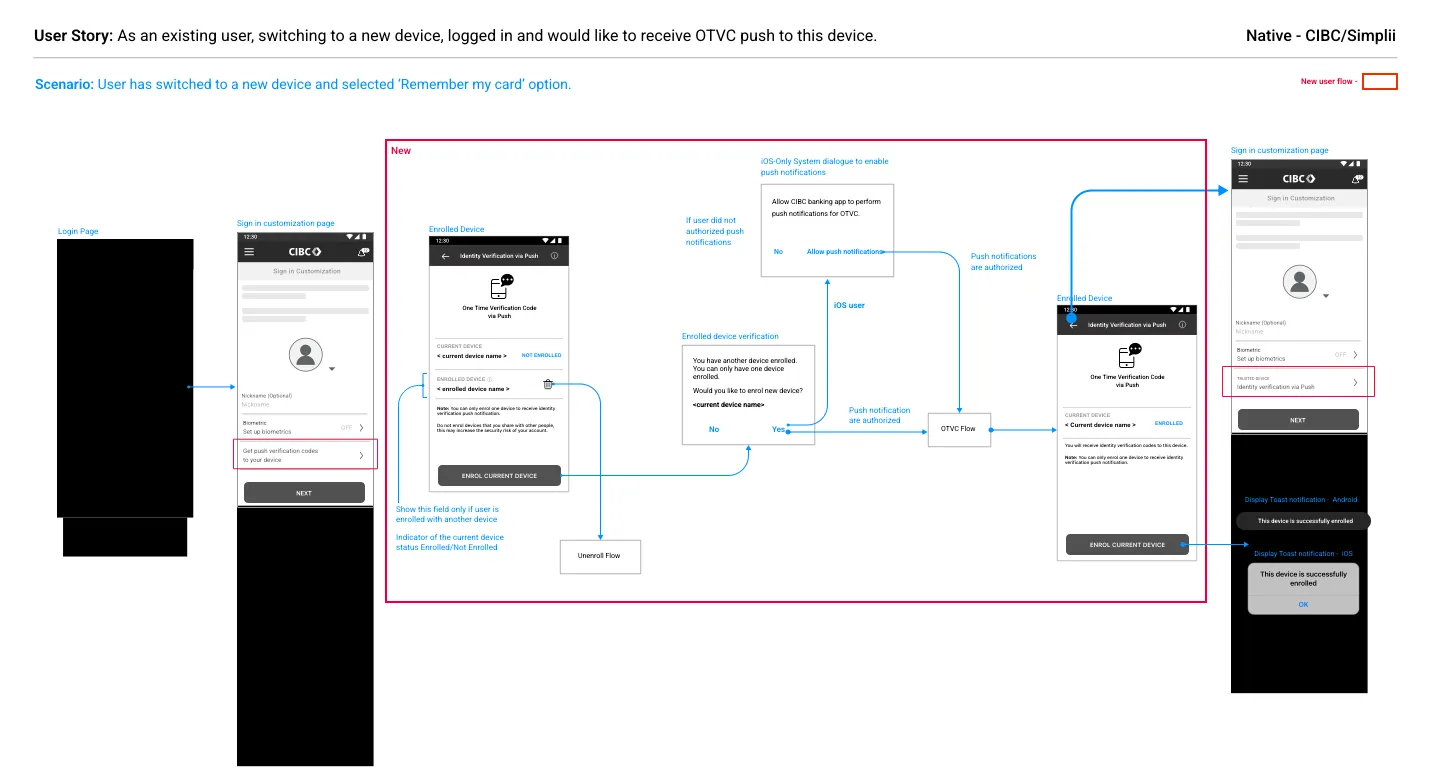
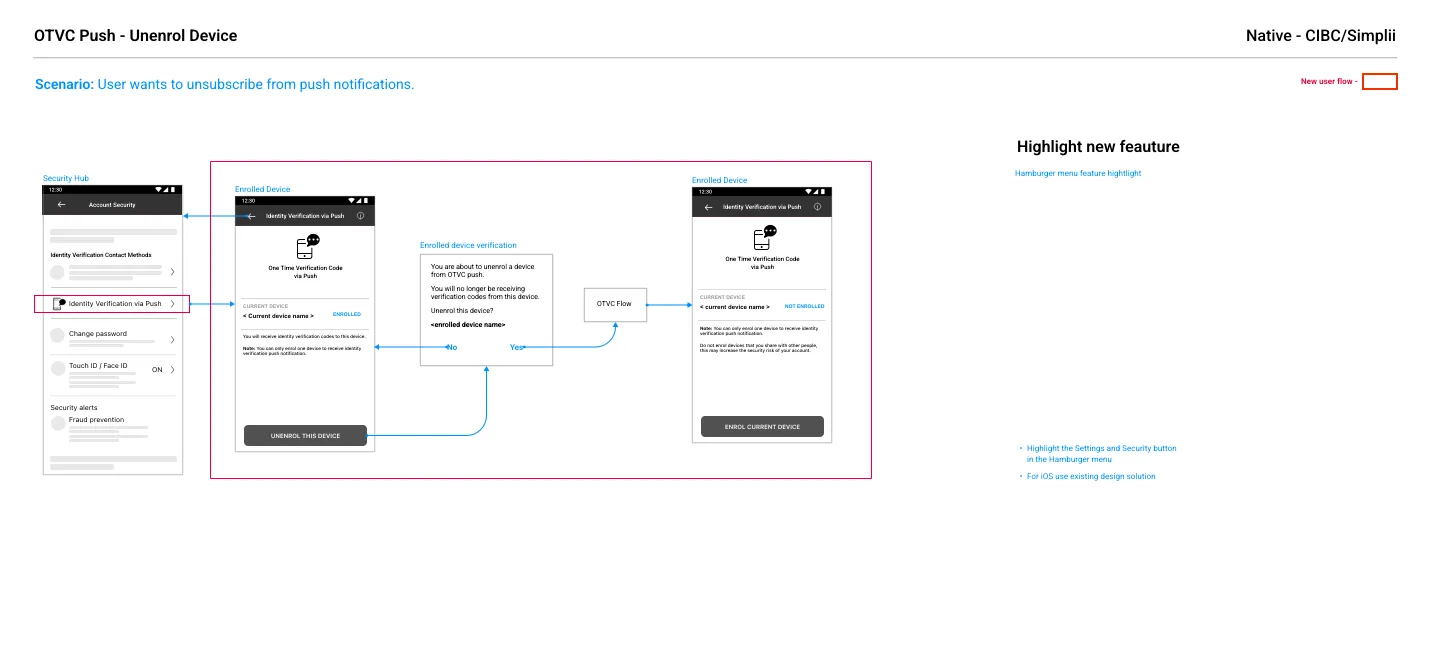
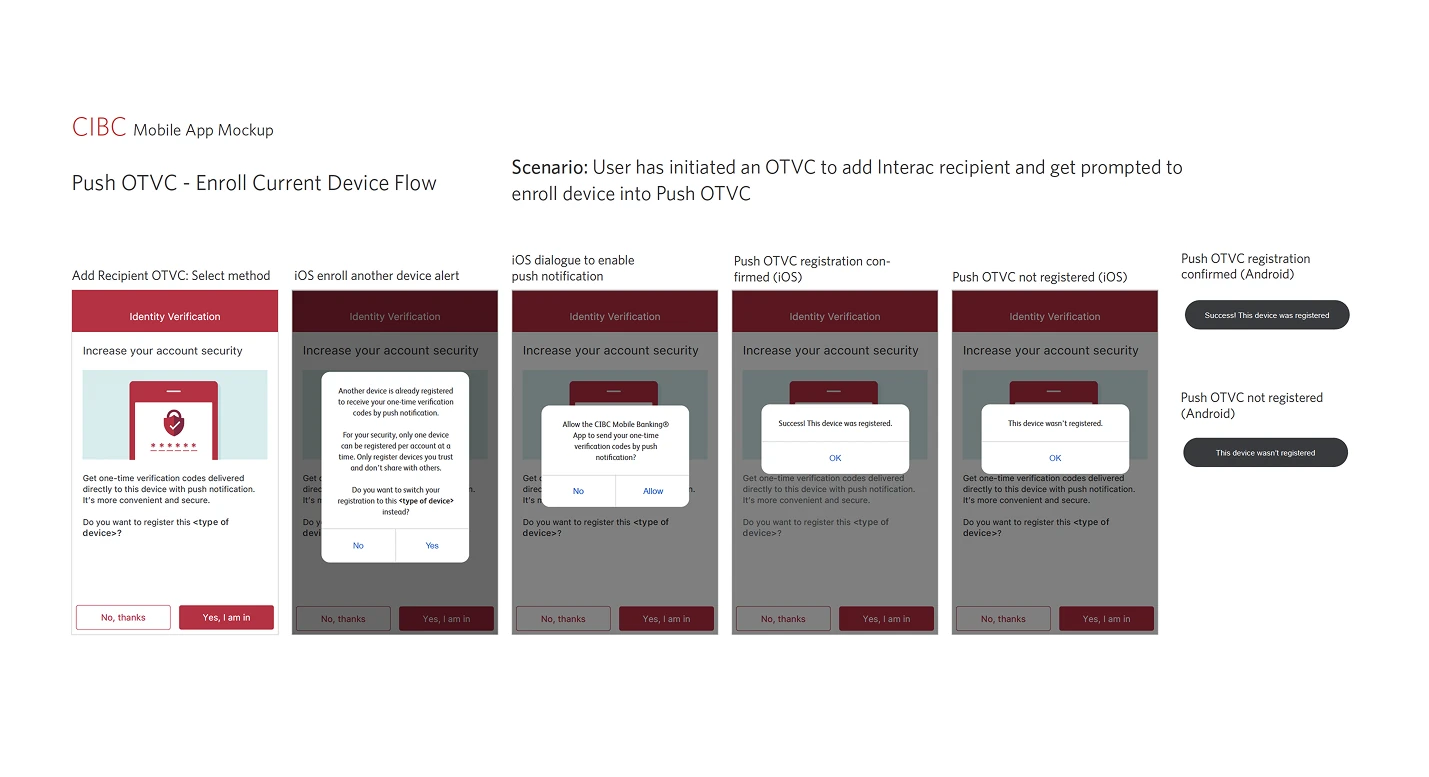
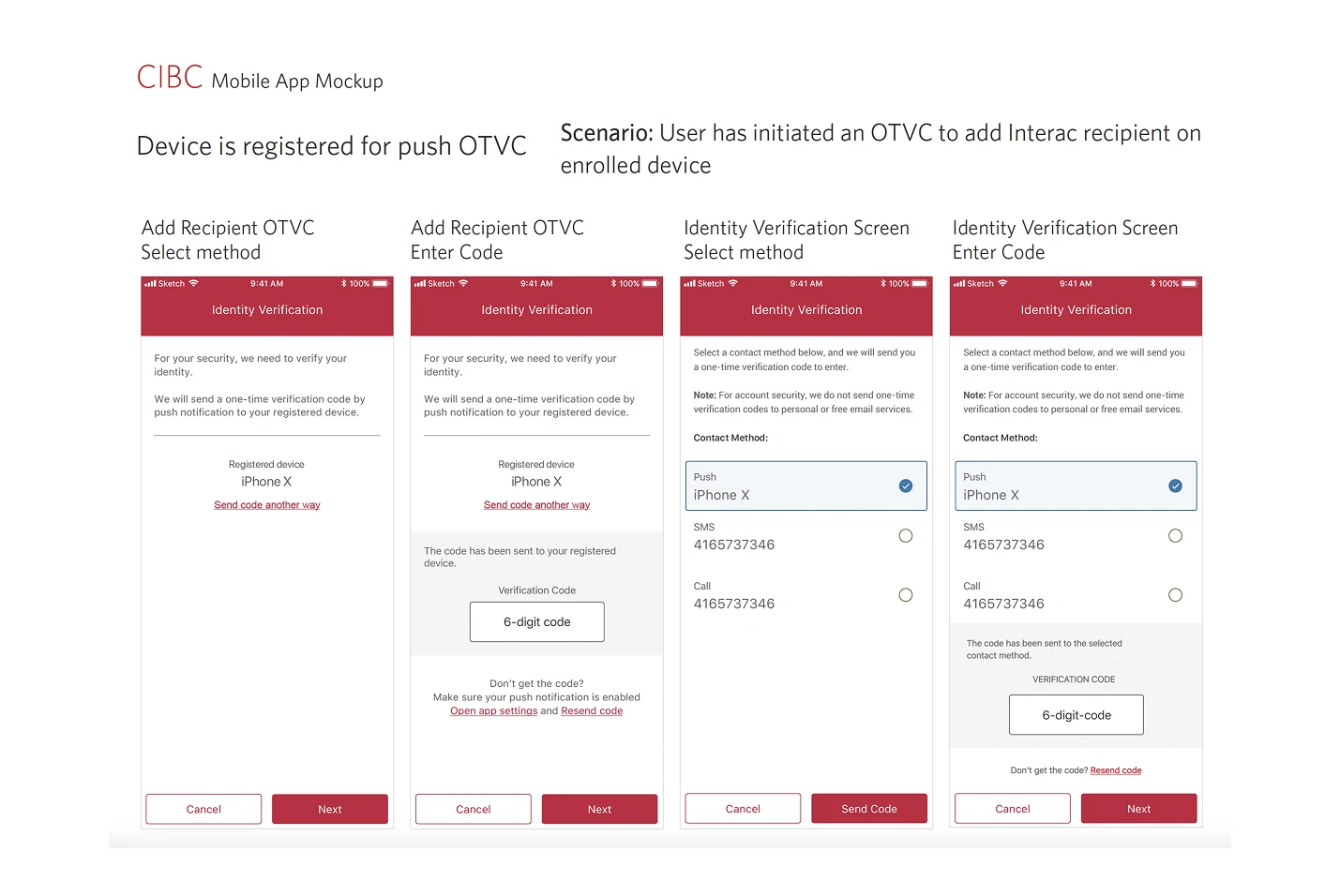
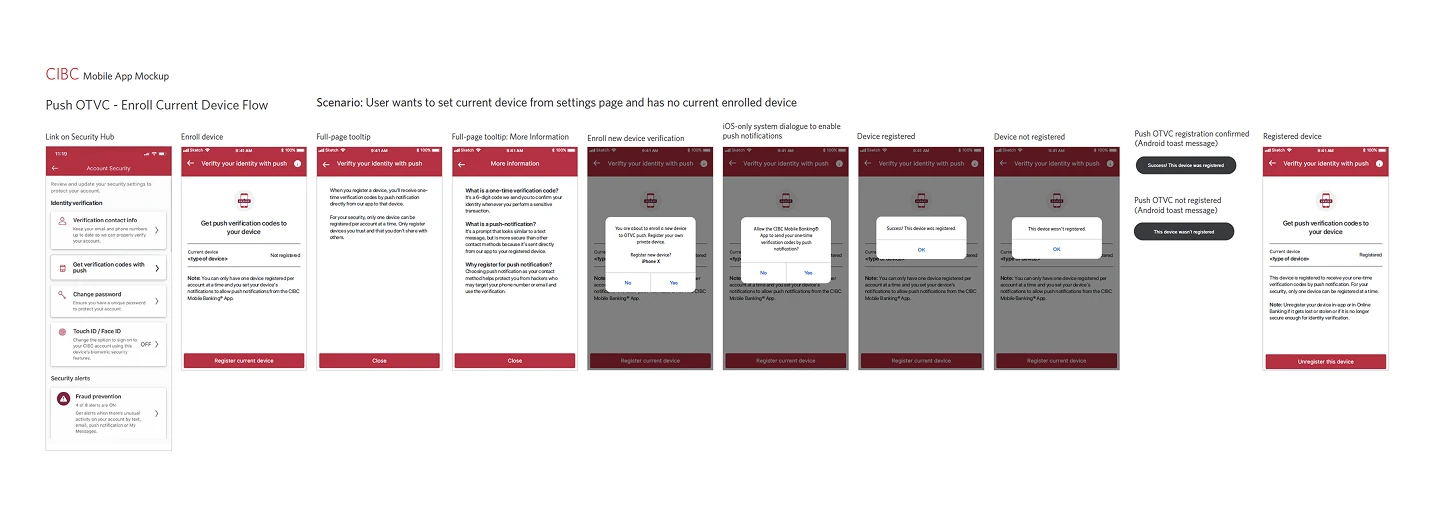
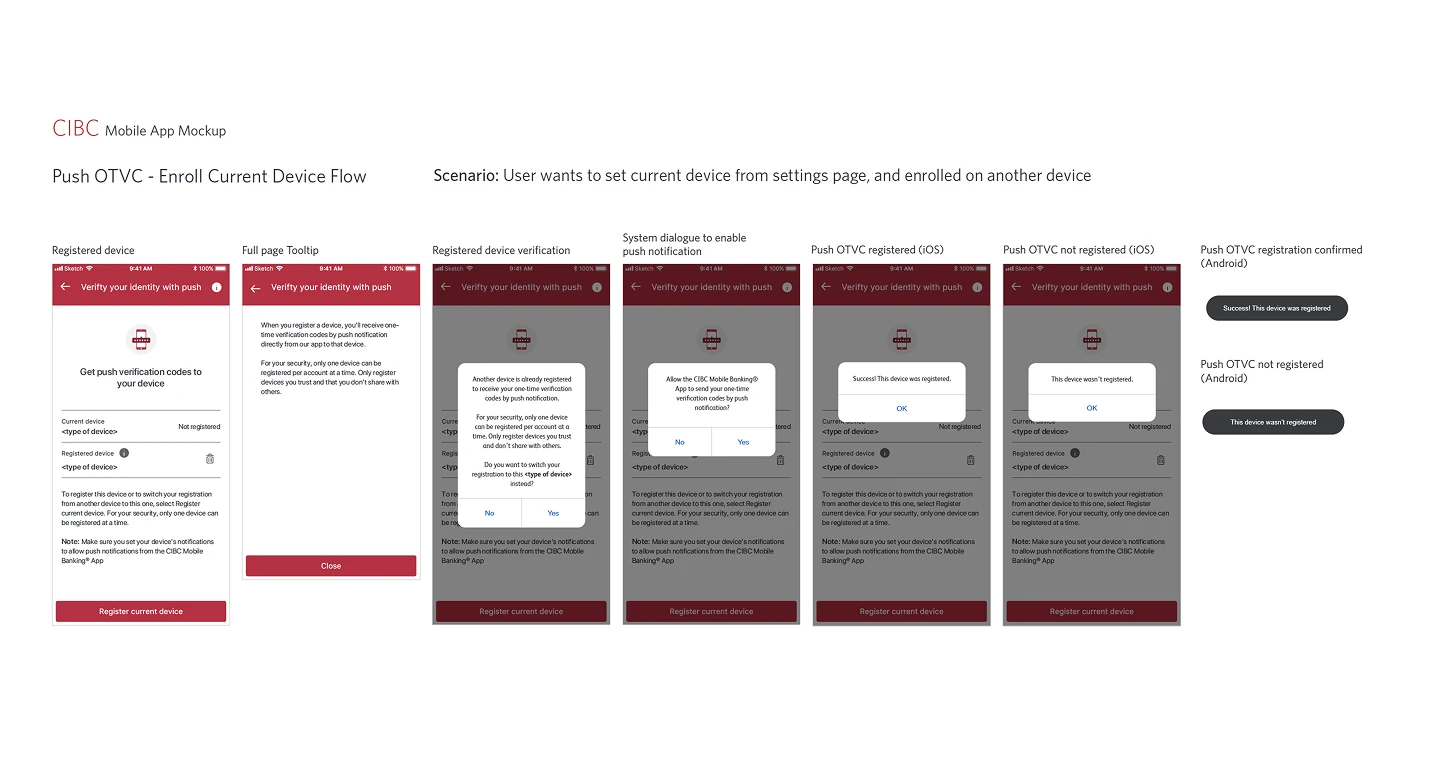
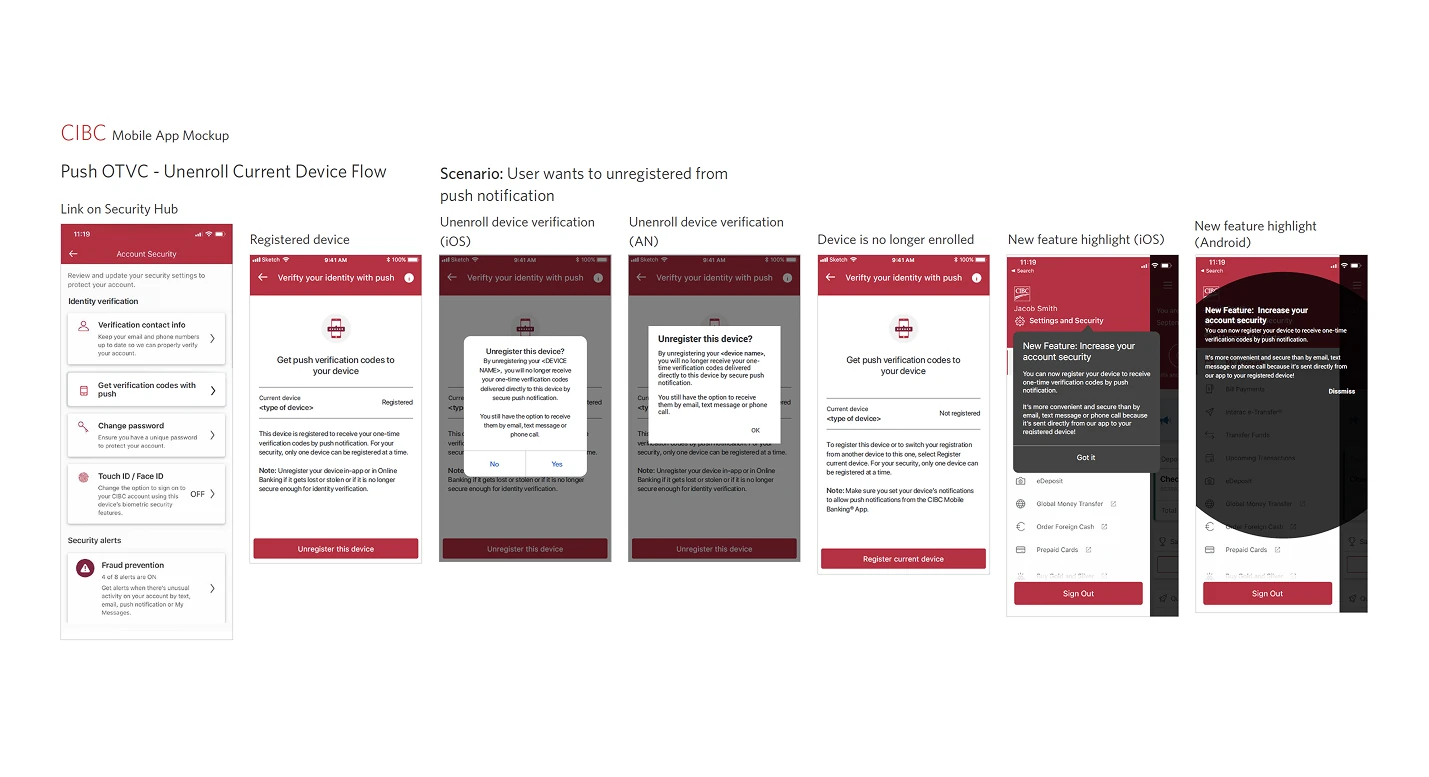
The results, and what changed for the people using it.
Designed an intuitive device registration experience that enables customers to receive one-time verification codes through push notifications, minimizing unnecessary authentication friction.
Established clear instructions, meaningful feedback, and intuitive interaction patterns to help customers navigate device registration and notification scenarios with confidence.
Translated complex business, security, and technical requirements into an accessible, user-friendly banking experience through close cross-functional collaboration.
I learned that security and usability should complement each other. Through thoughtful interaction design and cross-functional collaboration, complex security requirements can be transformed into intuitive, accessible, and reassuring customer experiences.
Two more case studies, fresh from the same kitchen.
A streamlined and secure sign-on experience for CIBC's Verified.Me.
View Case Study Product Design · Fruit tartA simpler, more accessible self-service experience.
View Case StudyHave an exciting opportunity or creative challenge? I'd love to connect.