Improve Information Findability
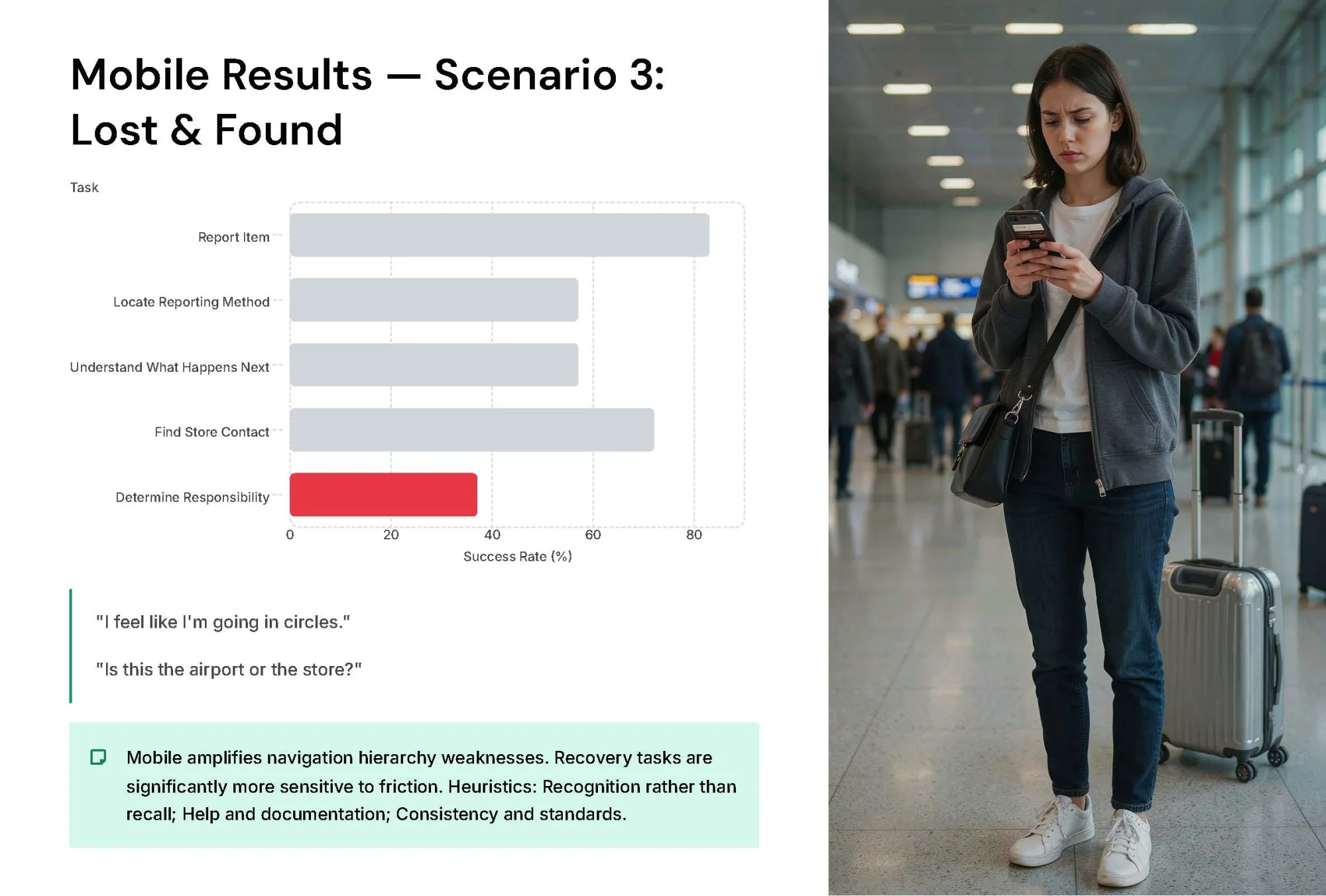
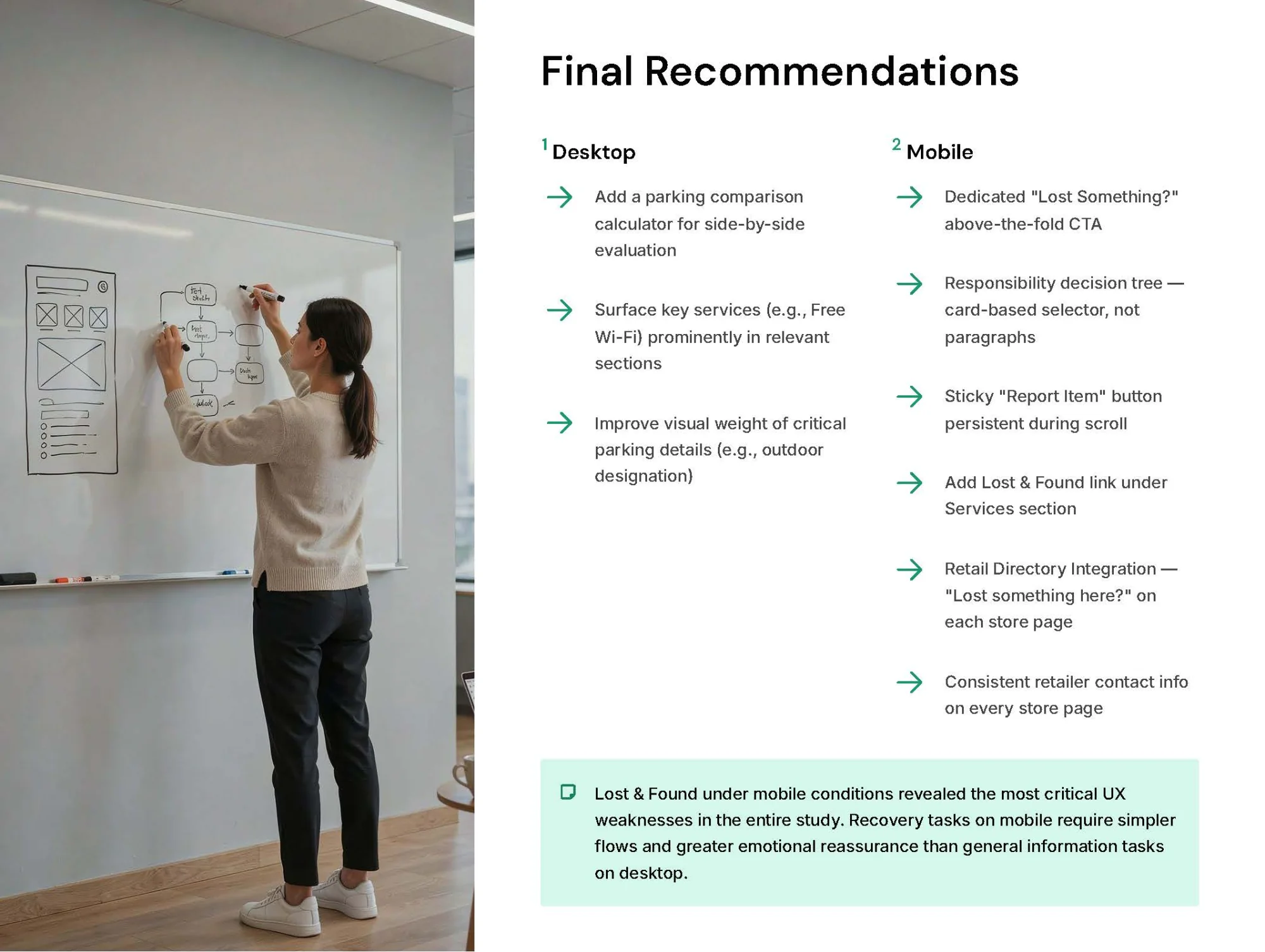
Introduce a prominent “Lost Something?” button on the mobile website, enabling travellers to quickly locate lost-item reporting services without unnecessary navigation.


Improving key travel tasks for a smoother passenger experience.
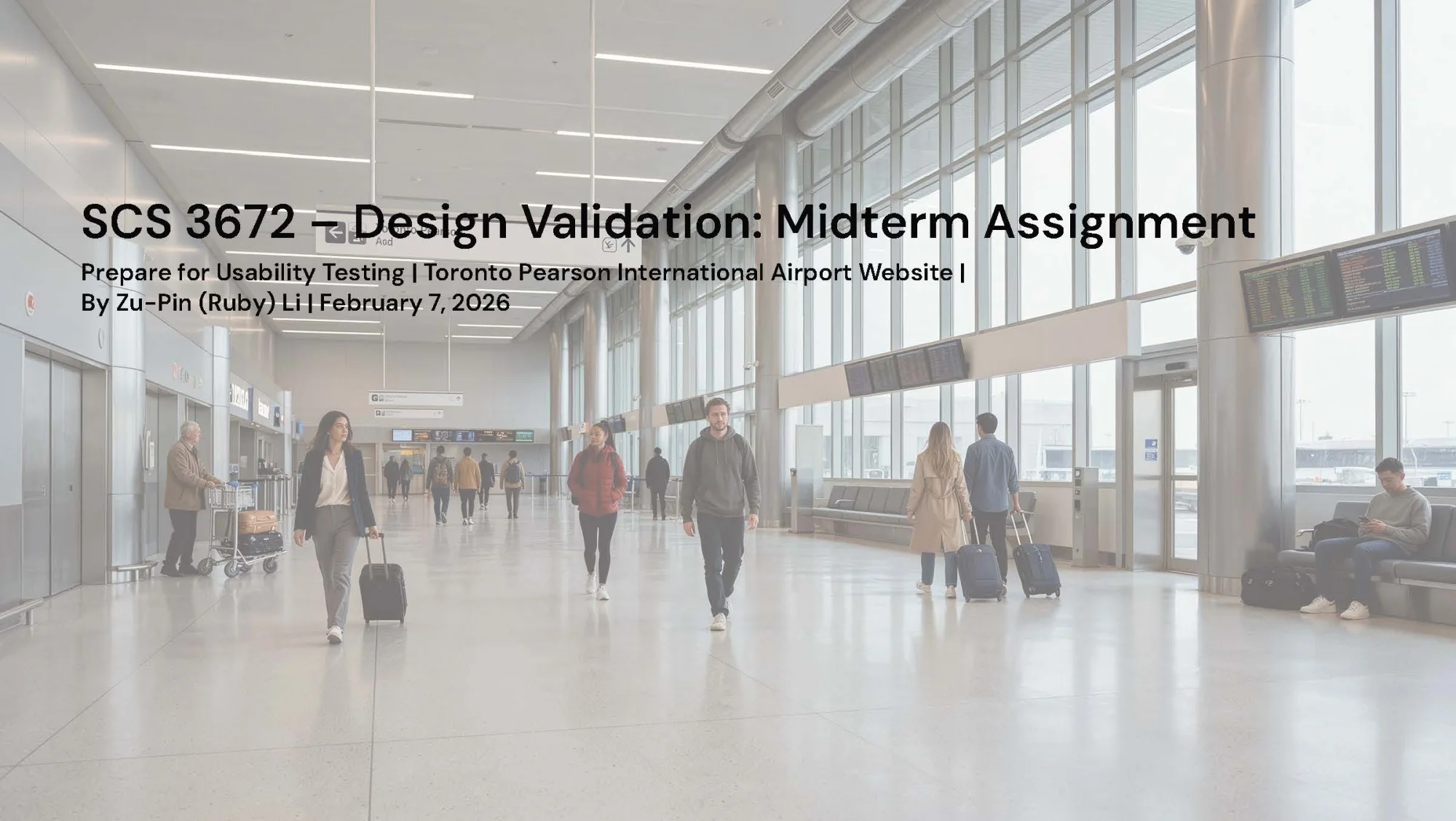
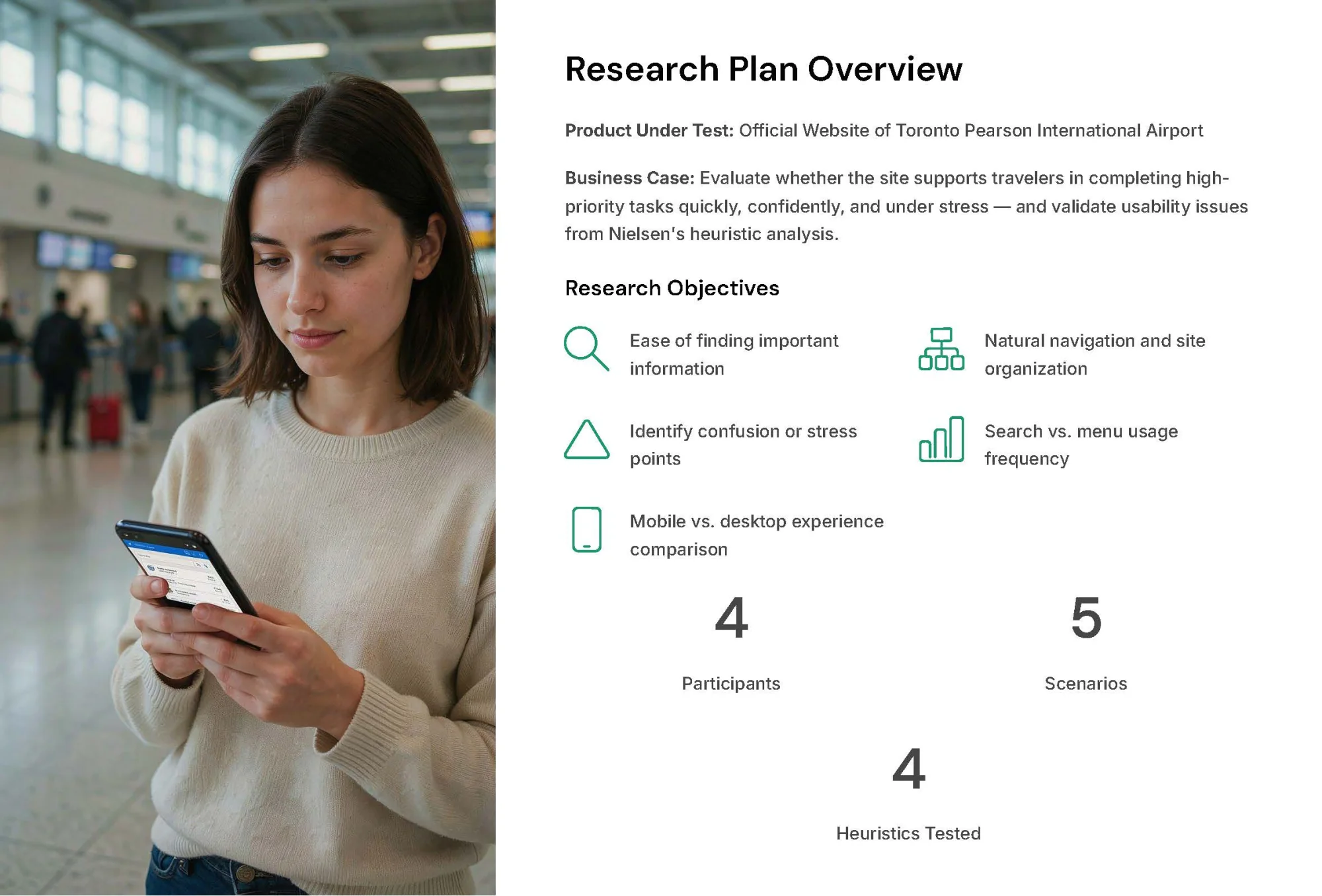
The goal of this study was to evaluate the usability of Toronto Pearson International Airport’s website, identify pain points across essential traveller tasks, and develop actionable recommendations to improve navigation, clarity, and user confidence across desktop and mobile experiences.
The research focused on understanding how effectively travellers navigate the airport website, access essential information, and seek assistance during stressful situations.
Key research questions included:
Leading End-to-End Usability Research
I independently led the entire usability study, from research planning and participant recruitment to scenario development, moderated think-aloud testing, and findings analysis. I translated research insights into actionable, evidence-based design recommendations to improve information findability, task completion, and traveller confidence.

Set the study goals, choose the key travel tasks to test and define who should take part.
Watch participants work through those tasks on the website and note where they hesitate or get stuck.
Group what we saw into themes, rate each issue by severity and look for patterns across sessions.
Turn the findings into clear, prioritized design recommendations for the team.
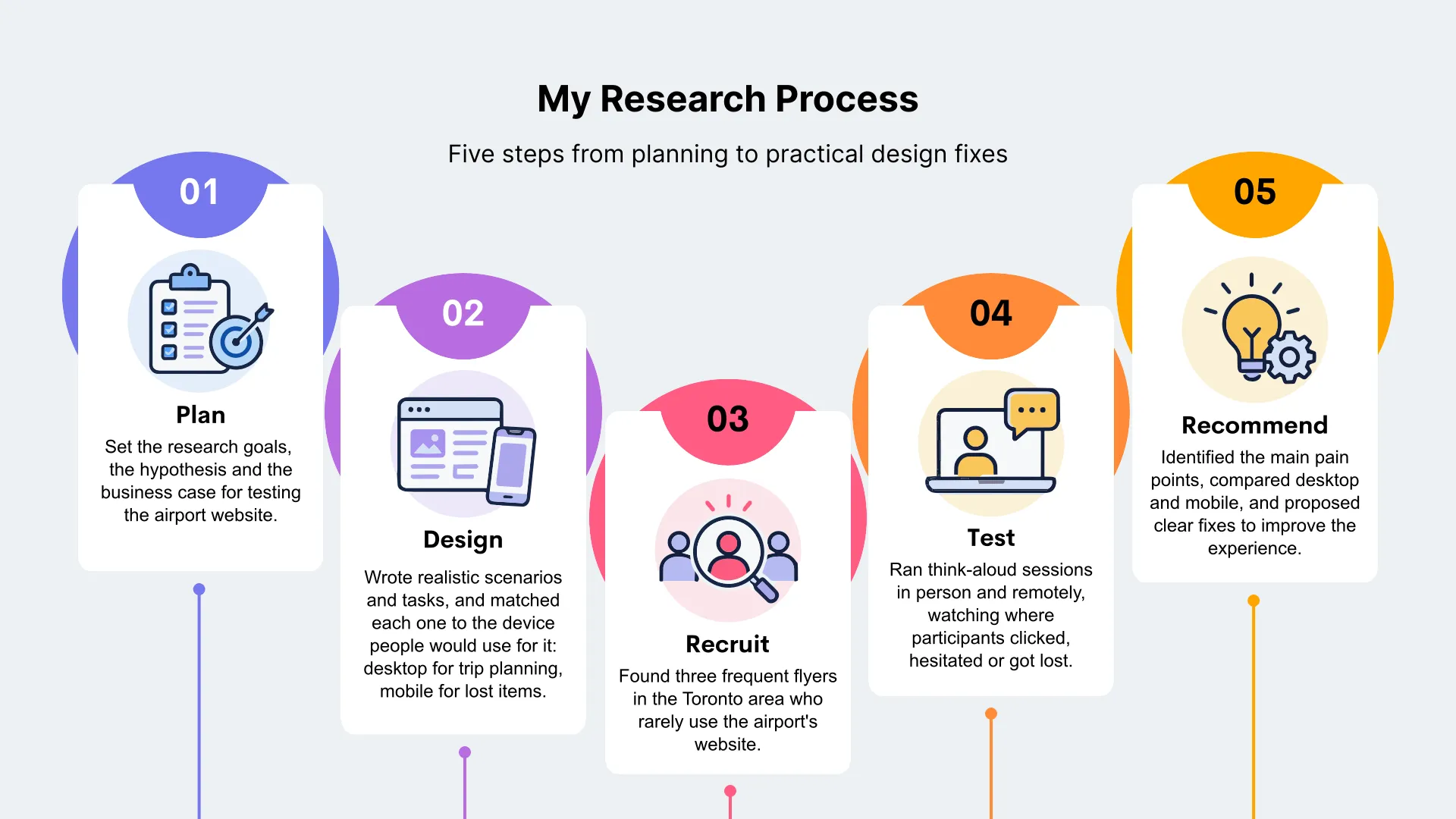
A look at the research itself: the tasks, the sessions and what travellers showed us.
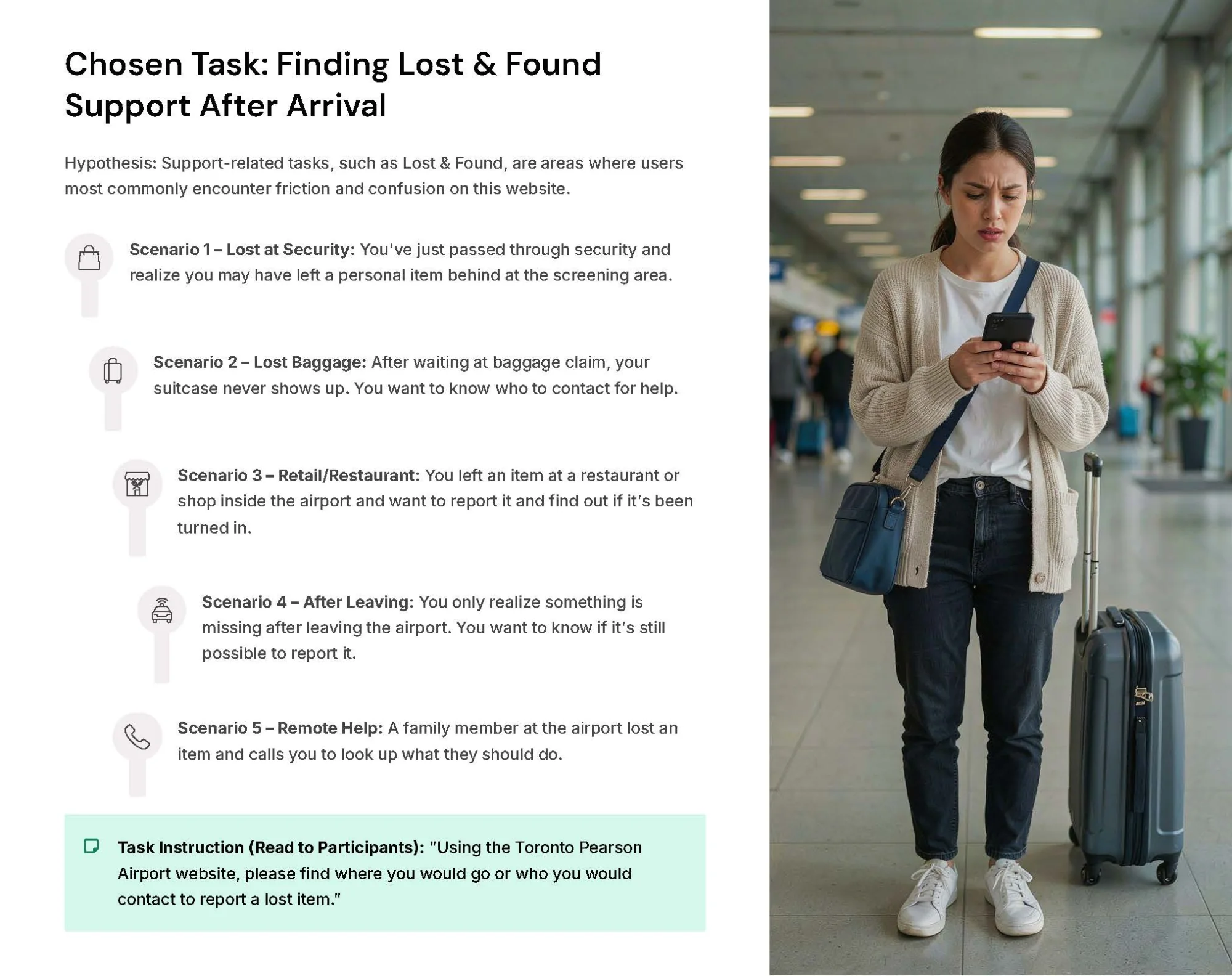
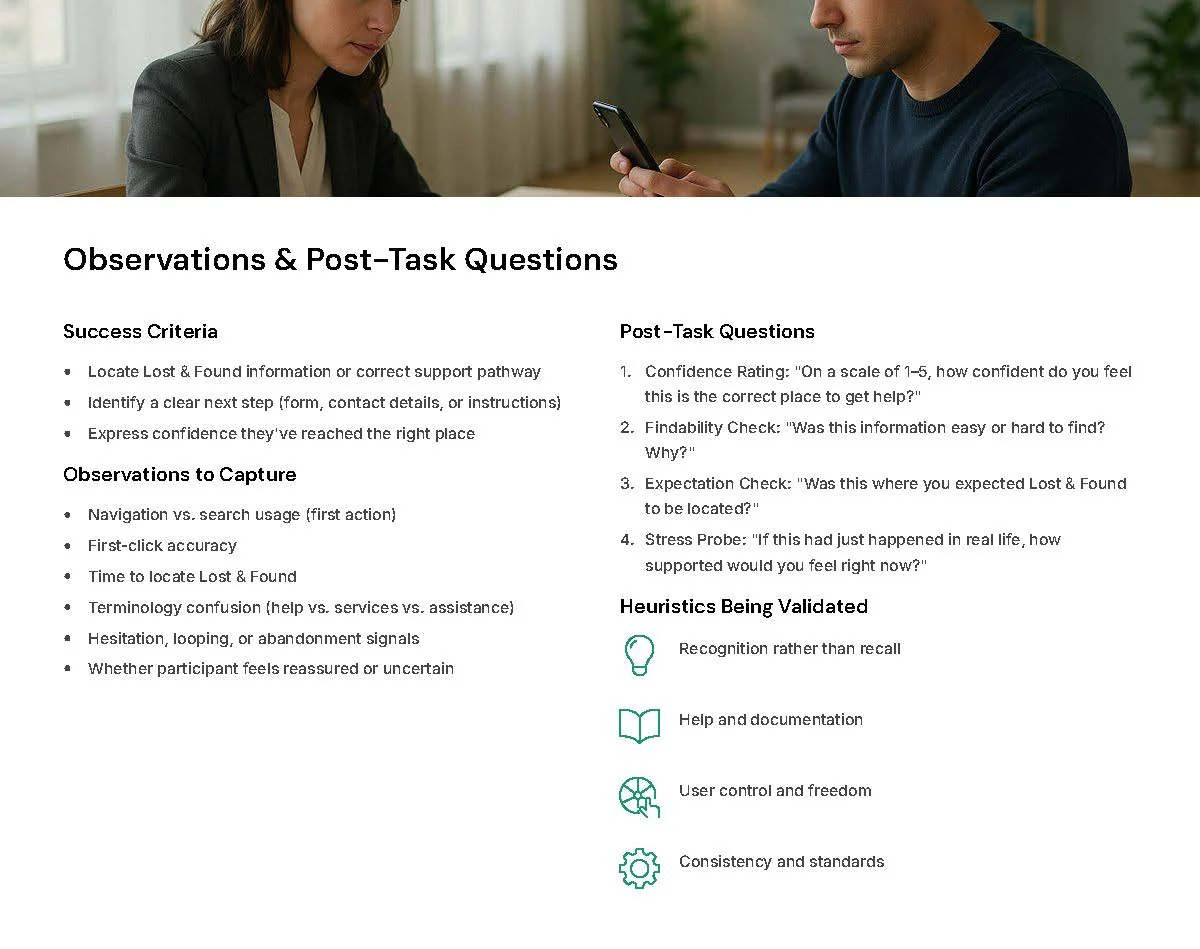
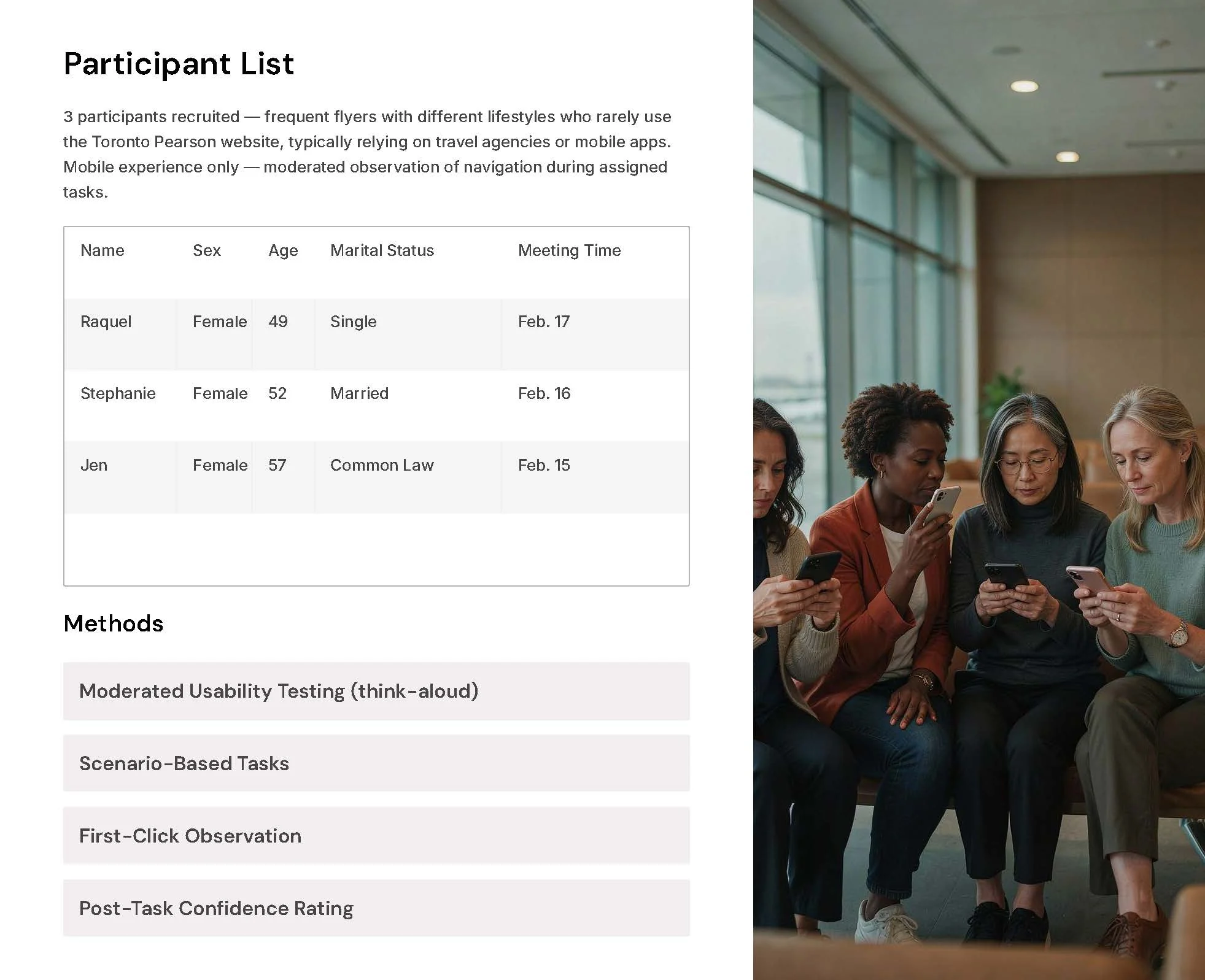
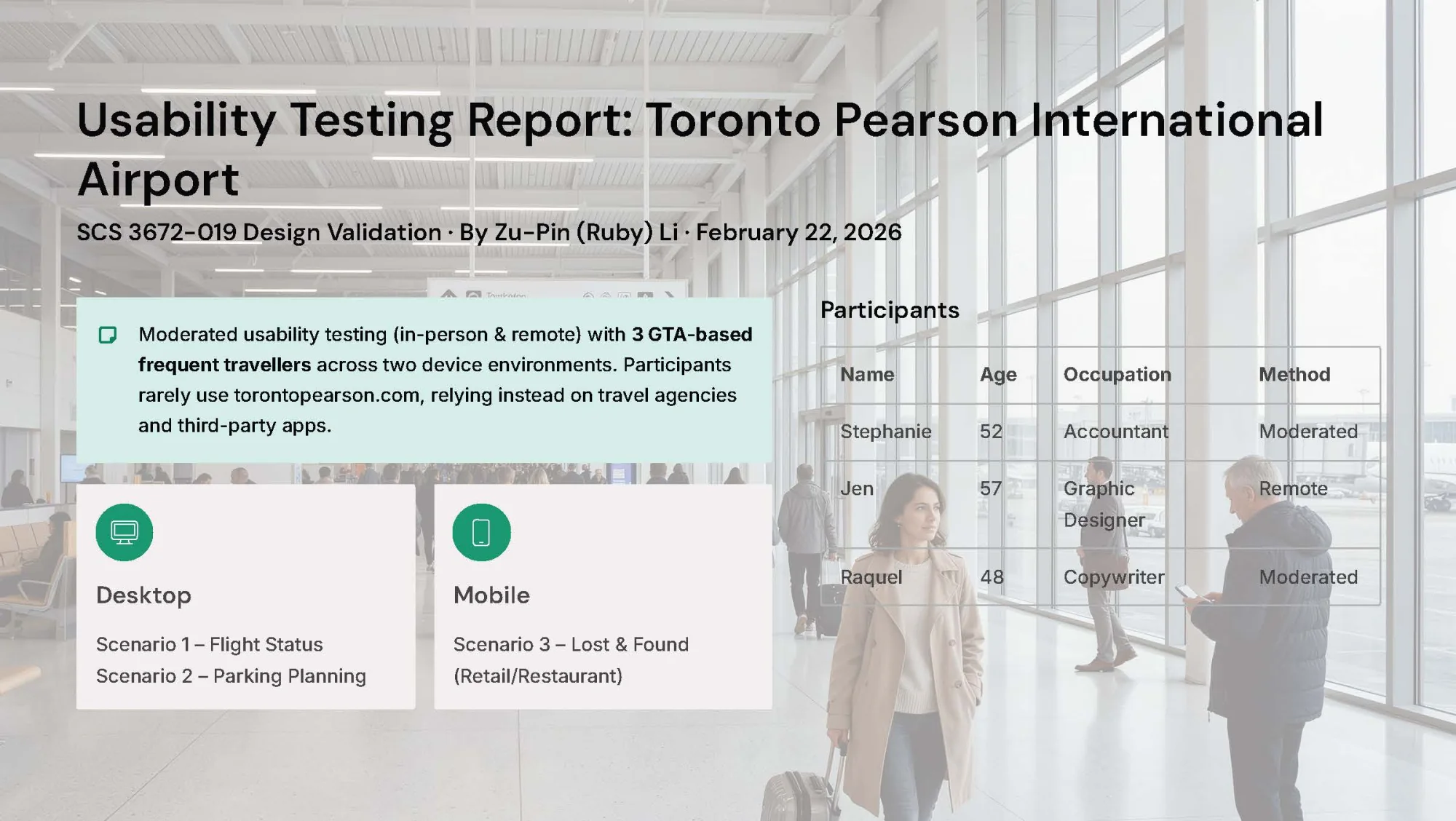
The recommendations, and what they would change for travellers.
Introduce a prominent “Lost Something?” button on the mobile website, enabling travellers to quickly locate lost-item reporting services without unnecessary navigation.
Provide a clear, easy-to-follow guide explaining who to contact based on where an item was lost, reducing confusion and strengthening traveller confidence during stressful situations.
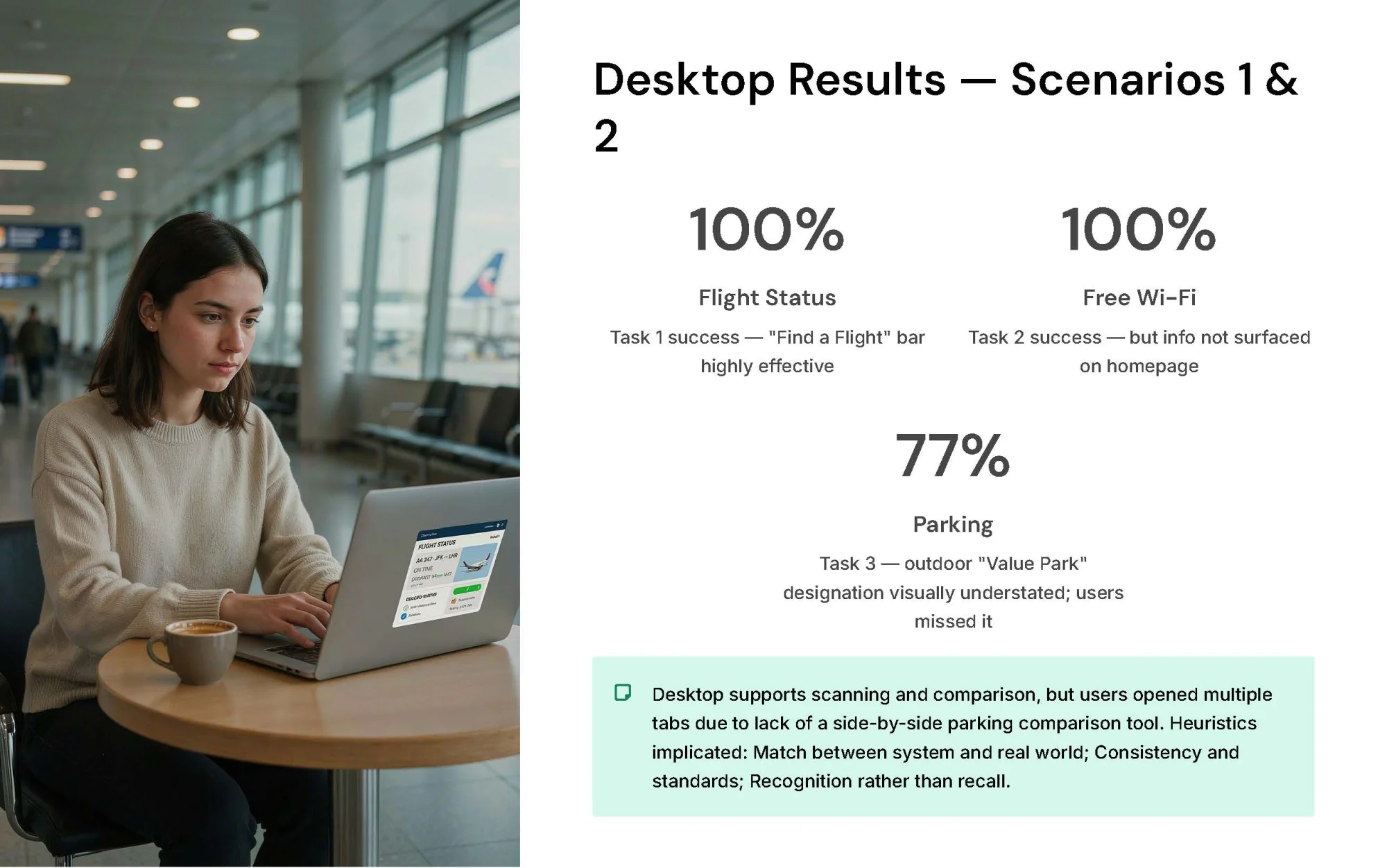
Introduce a side-by-side parking comparison that clearly presents parking options, rates, and relevant information, helping travellers make informed decisions more efficiently.
I learned that effective user experiences go beyond task completion. Understanding users’ emotional states, situational needs, and expectations is equally important. Usability research helps uncover overlooked barriers and informs more intuitive, empathetic, and reassuring digital experiences.
Two more specialties, fresh from the same kitchen.
Responsive pages with clear structure, readable type and layouts that hold up from phone to desktop.
See the Work Mobile Design · MacaronFlows sized for thumbs and short attention, tested on real devices before they ship.
See the WorkHave an exciting opportunity or creative challenge? I'd love to connect.